
They Had Lawyers From Day One.
Now You Do Too.
We depose surgeons, cross-examine anesthesiologists, and translate clinical negligence into seven-figure verdicts. Your questions deserve answers. Your case deserves to be heard.
Your situation has a name.
We've litigated it.
The Problem
"They altered the chart."
The discharge summary you received doesn't match what happened in the OR. Timestamps are off. A medication was retroactively added. You know something is wrong but can't prove it.
Our Move
We subpoena the original.
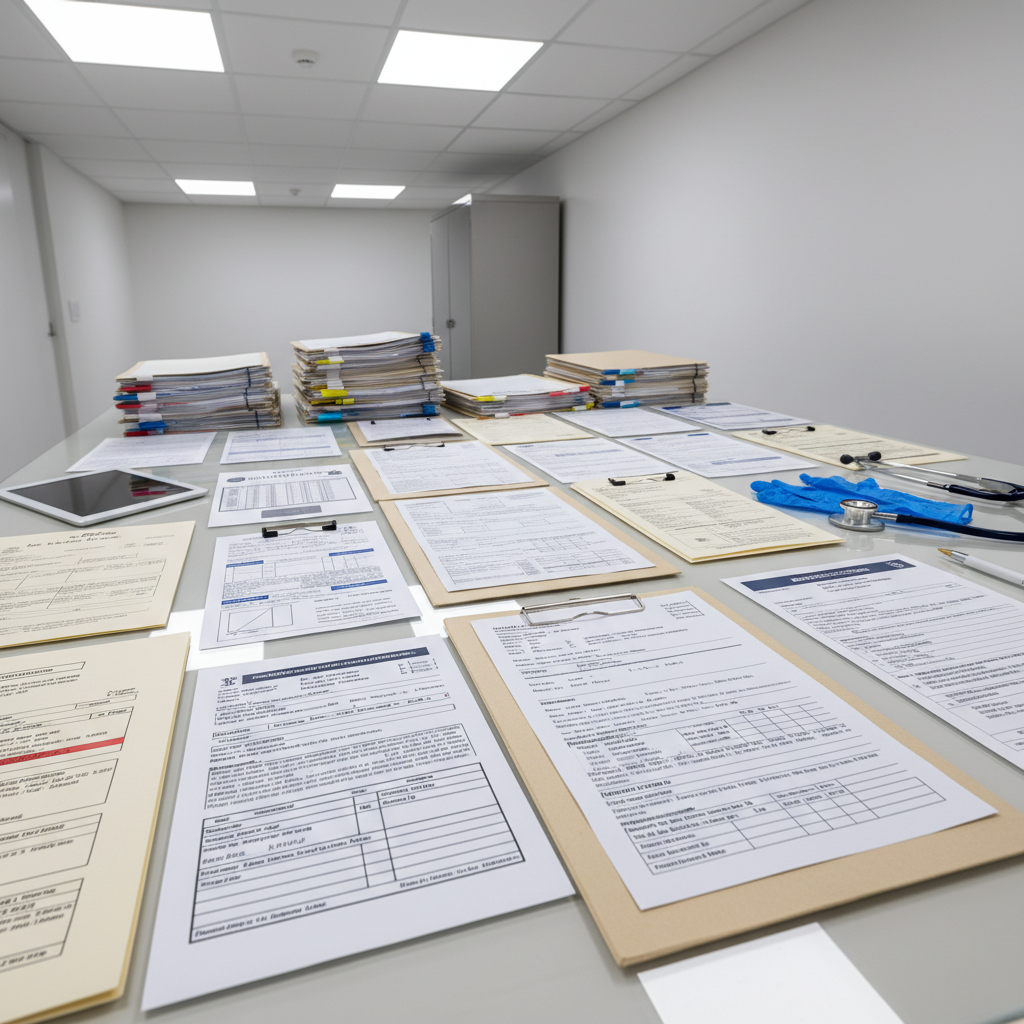
Electronic health records carry metadata — every keystroke, every edit, every timestamp. We retain forensic health informatics experts who reconstruct the original record and expose what was changed, when, and by whom.
The Problem
"Three doctors, three different stories."
The surgeon says the complication was unforeseeable. The anesthesiologist says the dosage was within range. The hospital says the protocol was followed. They've had months to align their accounts.
Our Move
We depose them separately, in sequence.
Deposition strategy is architecture. We structure the sequence so each witness commits to a version before they hear the others'. Contradictions surface. Inconsistencies compound. The truth emerges in the gaps.

The Problem
"The insurance company denied your claim."
They called it a "known risk." They said you signed a consent form. They sent a form letter and stopped returning calls. You were told this is just how it works.
Our Move
We build the case they hoped you'd never bring.
Consent forms don't cover negligence. We obtain the facility's own incident reports, quality improvement records, and prior complaint history — documents they are legally required to produce and rarely volunteer.

The Problem
"The autopsy doesn't match what the hospital told you."
The cause of death listed doesn't explain the bruising. The timeline the attending described doesn't align with the nursing notes. You're reading a document about someone you loved and it feels like fiction.
Our Move
We retain an independent forensic pathologist.
We work with board-certified forensic pathologists who review the autopsy, tissue samples, and toxicology independently. When the hospital's account is inconsistent with the physical evidence, we document exactly where — and why it matters.

What we've won
for clients like you.
Every number represents a family that asked the same questions you're asking. Every case was once a stack of confusing paperwork and a hospital's silence.
Surgical sponge retained post-abdominal procedure. Hospital denied the patient's complaints for 11 months before a second surgery revealed the cause.
Delayed diagnosis of ischemic stroke during labor. A 34-year-old mother sustained permanent neurological damage that a 20-minute intervention would have prevented.
Post-operative sepsis following elective knee replacement. Nursing staff documented warning signs for 18 hours before escalation. The patient was 67.
Anesthesia overdose during routine colonoscopy. The attending anesthesiologist was simultaneously managing two adjacent procedure rooms in violation of hospital protocol.
Failure to diagnose cervical cancer across three separate visits. Pathology reports were filed, never reviewed. The patient was 41 when the diagnosis was finally made.
Wrong-site spinal surgery. The operative consent named L4-L5; the surgeon operated on L3-L4. The patient required a second surgery and sustained permanent disability.
If you recognize your situation in any of these cases —
Tell us what happenedWe speak medicine.
We argue law.
Our litigation team includes attorneys who began their careers in clinical settings — an R.N. turned trial lawyer, a former hospital compliance officer, a pharmacologist who has testified in 90+ cases. When we read your records, we understand what we're reading.
Medical Expert Network
Surgeons, pathologists, pharmacologists, and nursing experts retained on an ongoing basis — not sourced per-case.
Records Analysis Team
Dedicated staff trained in EHR forensics, metadata extraction, and clinical documentation standards.
Trial-Tested
We take cases to trial. Insurance companies know it. It changes the math on every settlement offer we receive.
What it feels like
to finally be believed.
"The hospital told us it was "one of those things that happens." Counsel told us it wasn't — and proved it in front of a jury. For the first time in two years, someone read every page of what happened to my husband and believed us."
Margaret T.
Widow of a surgical error patient, New York
"I kept being told the birth complication was unforeseeable. My daughter is four now and she will never walk without assistance. The attorneys at Counsel sat with me for three hours before they ever mentioned a case number."
Priya N.
Mother, labor & delivery negligence, New Jersey
"My father went in for a routine procedure. He came out with sepsis and never fully recovered. I had no idea what questions to ask. Counsel knew exactly what to ask — and who to ask it to."
Robert D.
Son of post-operative negligence patient, Connecticut
Tell us what happened.
This is the beginning of a conversation, not an intake questionnaire. We'll read what you write. Someone who has litigated cases exactly like yours will call you back.
We review your case
An attorney with medical malpractice experience reads your submission — not a paralegal, not a chatbot.
We call you within 24 hours
A direct conversation. No scripts. No pressure. We tell you honestly whether we think you have a case.
We request your records
If we take your case, we obtain every relevant document ourselves. You don't chase paperwork.